
Drilling a Well in Palatka, Start to Finish
Updated
Drilling a well in Palatka takes more than a rig and a free afternoon. We wrote this guide around the questions we hear most: the choices you make before drilling, the permit, what happens on drilling day, and what to test once the water is flowing.
Members of the Florida Ground Water Association. Every well permitted before we drill. Free estimates.
The local facts that shape a Palatka well
- County
- Putnam County had 73,321 residents at the 2020 census, with Palatka as its county seat. Source: Wikipedia, Putnam County, Florida
- Water district
- The St. Johns River Water Management District, which sets well construction rules for the region, has its headquarters in Palatka. Source: Wikipedia, Palatka, Florida
- The aquifer
- The City of Palatka's own supply comes from five wells in the Floridan Aquifer. Source: City of Palatka 2025 Water Quality Report
- Watering rules
- District watering restrictions apply to private wells and pumps as well as utility water. Source: St. Johns River Water Management District, Watering Restrictions
- Testing
- The Florida Department of Health recommends testing a private well for bacteria and nitrate at least once a year. Source: Florida Department of Health, Private Wells
- Contractors
- Water well contractors in Florida are licensed under Chapter 62-531 of the Florida Administrative Code. Source: Florida Administrative Code, Rule 62-531.300
Step 1: City water or a well
Inside Palatka city limits most homes can connect to the city's water system, and many choose to. Out past the city line, toward Interlachen, Florahome or Bostwick, there is often no main to connect to, and a private well is how the house gets water.
If a city line runs past your lot, a well can still make sense for irrigation. If it does not, the well is your water supply, and it is worth getting right the first time.
Step 2: Choose the spot
The rules come first. A drinking water well has to sit at least 75 feet from a septic tank and drainfield, and an irrigation well at least 50 feet. On a lot that is still being planned, put the well and the septic system on the same drawing.
After that it is practical. Keep the wellhead on ground that drains, out of the path of the driveway, and where a service truck can back up to it years from now.
Step 3: The permit
No well gets drilled in Putnam County without a construction permit. For most house wells the Florida Department of Health in Putnam County issues it. Larger wells, six inches or more across, and wells in the areas the water management district has delineated for groundwater problems are permitted by the district itself.
The licensed contractor files the application. When you hire us, that is our job, and we schedule drilling for when the permit is approved.
Step 4: Drilling day
The rig sets up over the marked spot and drills through the sand and clay into the limestone. We set the casing, pump grout around it to seal the hole from the surface, then drill the open section in the rock below.
Expect noise, a truck in the yard and some mud around the wellhead while we work. We pump the new well until the water runs clear, then clean up the site.
Step 5: Pump, tank and first water
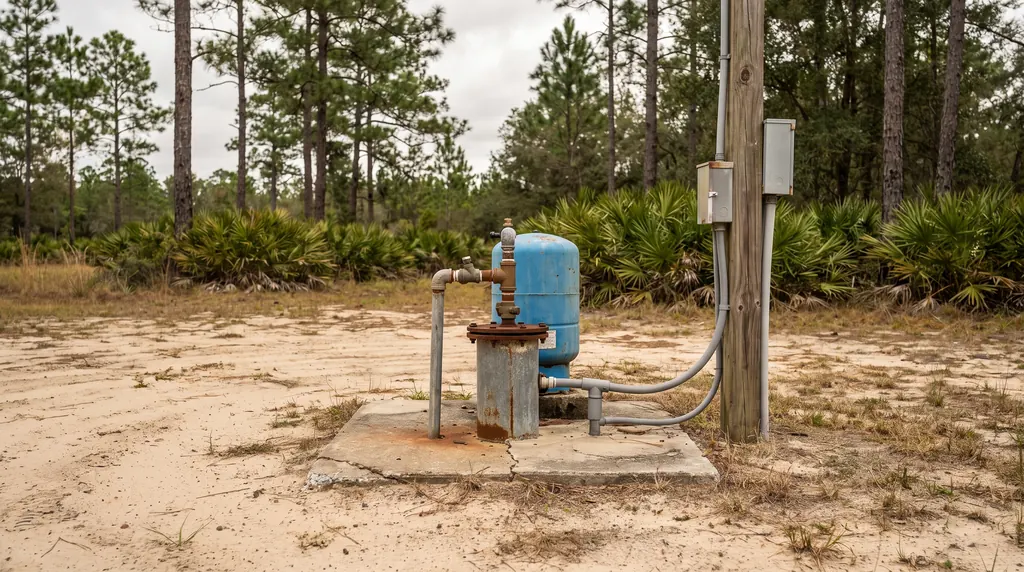
We set the submersible pump on the drop pipe, wire it, and connect the pressure tank and switch near the house. Then we bring the system up to pressure and check every joint.
Run the taps for a while once you have water. A little cloudiness at first is normal for a brand new well.
Step 6: Test the water
Nobody tests a private well for you. The Florida Department of Health recommends testing for bacteria and nitrate at least once a year, and the first test is the one that sets your baseline.
Floridan water around Palatka often carries hydrogen sulfide, the rotten egg smell, and some wells carry iron that stains fixtures. Neither one means the well was drilled wrong. A test tells you what is there, and treatment can handle it.
Questions about drilling a well in Palatka
How long does it take to drill a well in Palatka?
The permit review sets the pace. Drilling and setting the pump usually take a few days once the permit is approved.
Can I drill my own well?
Florida licenses water well contractors under Chapter 62-531, and every well needs a construction permit. Call us before you rent anything.
How deep will my well be?
It depends on where good water sits under your lot. We give you an expected depth with your free estimate.
Do I need to test a new well?
The state does not require it, but the Florida Department of Health recommends testing private wells for bacteria and nitrate every year, starting with the first.
Keep planning your Palatka well
Well drilling in Palatka
Household and irrigation wells for Palatka and western Putnam County.
Irrigation well drilling
A separate well for the lawn, garden or pasture, sized to your zones.
Well replacement in Palatka
When the old well pumps sand, runs short or fails its tests.
Start with a free estimate
Call us with your address. We will walk the lot, find the spot and handle the permit.
Call to book a visit. Emergency service available, call us.